
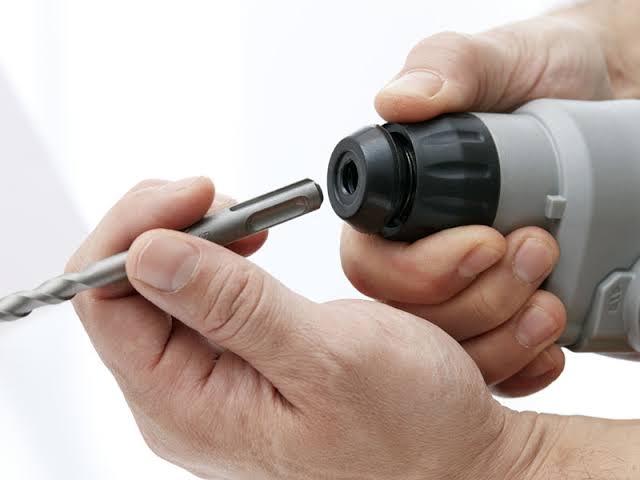
SDS drills refine this system further with a chuck design that allows the bit to travel axially during each hammer stroke. This freedom means none of the impact energy is absorbed by the clamping mechanism—it travels directly into the material.
Construction professionals working with concrete, stone, or dense masonry understand the gap between an adequate tool and the right one. The difference shows up in drilling time, bit wear, operator fatigue, and the quality of the finished hole. Selecting a rotary hammer with a clear understanding of the specifications that matter most is the most reliable way to ensure the tool performs at the level the work demands.
Why Rotary Hammer Drills Outperform Standard Drills in Hard Materials
The fundamental limitation of a standard drill when applied to concrete or masonry is that it relies entirely on rotational force. Hard, granular materials like concrete do not yield well to rotation alone—they require an impact that fractures the aggregate particles at the point of contact. Without that hammering action, the drill bit simply grinds against the surface, generating heat and wearing down rapidly without making meaningful progress.
A rotary hammer solves this by adding a pneumatic hammering mechanism that operates independently of the chuck rotation. With each revolution, the bit receives a series of high-frequency impact pulses that fracture the material ahead of it. The bit then clears the fractured particles through its fluting, allowing the next impact to contact fresh material. This cycle—strike, clear, advance—is what makes rotary hammers dramatically more effective in hard substrates.
Choosing Between SDS-Plus and SDS-Max
SDS-Plus for Versatile Professional Use
SDS-Plus is the dominant rotary hammer format in the construction industry for good reason. It covers the broad middle ground of professional drilling tasks: installing anchors in brick and standard concrete, running service penetrations through block walls, and general masonry work across residential and commercial projects.
The tools themselves are compact and manageable, which matters when working in tight ceiling voids, over obstacles, or in areas where a larger tool body would become a practical problem. The wide availability of compatible SDS-Plus accessories—drill bits, chisels, core bits, and cleaning brushes—also means operators can adapt the tool to a variety of tasks without significant additional investment.
SDS-Max for High-Impact Professional Applications
SDS-Max enters the picture when the work involves thick or heavily reinforced concrete, large-diameter core drilling, or sustained heavy chiseling. The format’s wider shank allows considerably more impact energy to be transferred to the bit, making a material difference in how quickly and cleanly the tool penetrates dense substrates.
For professionals in civil construction, structural work, or groundworks, SDS-Max is often the only appropriate format. The tools are heavier and require more physical management during use, but when the material demands that level of force, lighter alternatives simply cannot deliver comparable results.
Evaluating Performance Specifications Objectively
Impact Energy as the Primary Benchmark
Impact energy, the measure of force delivered per hammer stroke, is the most telling specification when comparing rotary hammer models for heavy-duty work. A higher rating means the tool strikes harder with each pulse, which translates directly into faster penetration of dense materials and reduced wear on drilling accessories.
Matching the impact energy rating to the application avoids two common mistakes: underspecifying a tool for demanding material (resulting in slow progress and premature wear) and overspecifying for lighter tasks (resulting in a heavier, more expensive tool that provides no additional benefit).
Motor Power and Its Relationship to Sustained Performance
Motor power determines how well a tool maintains its performance over extended periods of use and through repeated contact with hard material. A more powerful motor sustains the required impact energy across a full working day without thermal degradation in output. For professionals using the tool intensively and regularly, motor power is a meaningful differentiator between tools that appear similar on other specifications.
Bit Retention and Chuck Longevity
The quality of the SDS chuck mechanism affects both drilling performance and long-term tool reliability. A well-engineered chuck retains the bit securely during the hammering cycle while allowing the axial movement that makes the impact mechanism effective. Over time, worn or poorly manufactured chucks introduce play that reduces impact efficiency and accelerates bit wear. Professional-grade tools invest in robust chuck engineering—a detail that justifies a higher initial cost over years of heavy use.
Practical Considerations for Site Use
Cable Management vs. Cordless Freedom
The working environment often determines which power source makes more sense. On sites where electrical supply points are readily available and the tool will be used continuously in one area, a corded rotary hammer offers uninterrupted performance with no battery logistics to manage. For operators who move frequently across a large site, work at height, or need to drill in locations where running an extension lead is impractical, a cordless platform on a high-quality battery system provides genuine operational advantages.
Auxiliary Handle Positioning
An auxiliary side handle is standard equipment on rotary hammer drills, providing the second point of control necessary to manage the reactive torque generated during hammer drilling. The positioning and adjustability of this handle affect how comfortably and safely the tool can be used across different working angles. Tools that allow the auxiliary handle to rotate and lock at multiple positions give the operator greater flexibility when drilling horizontally, vertically, or at an angle.
Dust Extraction Compatibility
Drilling into concrete and masonry generates silica-containing dust, which is a recognized respiratory hazard. Many professional rotary hammer drills are designed to accept dedicated dust extraction shrouds that capture airborne particles at the source. Where this capability is important for site compliance or health and safety requirements, confirming compatibility with a dust extraction system before purchase is a practical step.
Investing Wisely in a Tool Built for the Long Term
The rotary hammer drill category rewards careful research. A tool selected with a clear understanding of the application it will serve—the hardest material it will encounter, the diameter of holes it will regularly drill, and the environment in which it will operate—will perform more reliably and last considerably longer than one chosen without that context.
The upfront investment in a professional-grade tool is consistently recovered through reduced consumable costs, faster completion times, and a machine that continues to perform at specification through years of demanding use.